Why I write
The playbook gives the method. These notes are the part you actually live. I write them close to the moment, not from memory. The real move to San Francisco is still ahead of me, not behind.
Read moreShow less
I didn't want the clean, flattering version people write two years later, where every detour looks planned. So this includes the doubts, the lucky breaks and the things that went wrong. It's not finished, and I keep adding to it as it goes.
Part 1
Sport
Before finance, before research, before advisory, there was tennis. It shaped how I got to the US, and how I approach everything else.
Tennis
I started playing competitively at eight years old. Sixteen years of training and tournaments in France, reaching national championship level on the FFT circuit. The discipline, the match preparation, the ability to stay focused when a set turns against you: those became instincts before I ever thought about business.
Read moreShow less
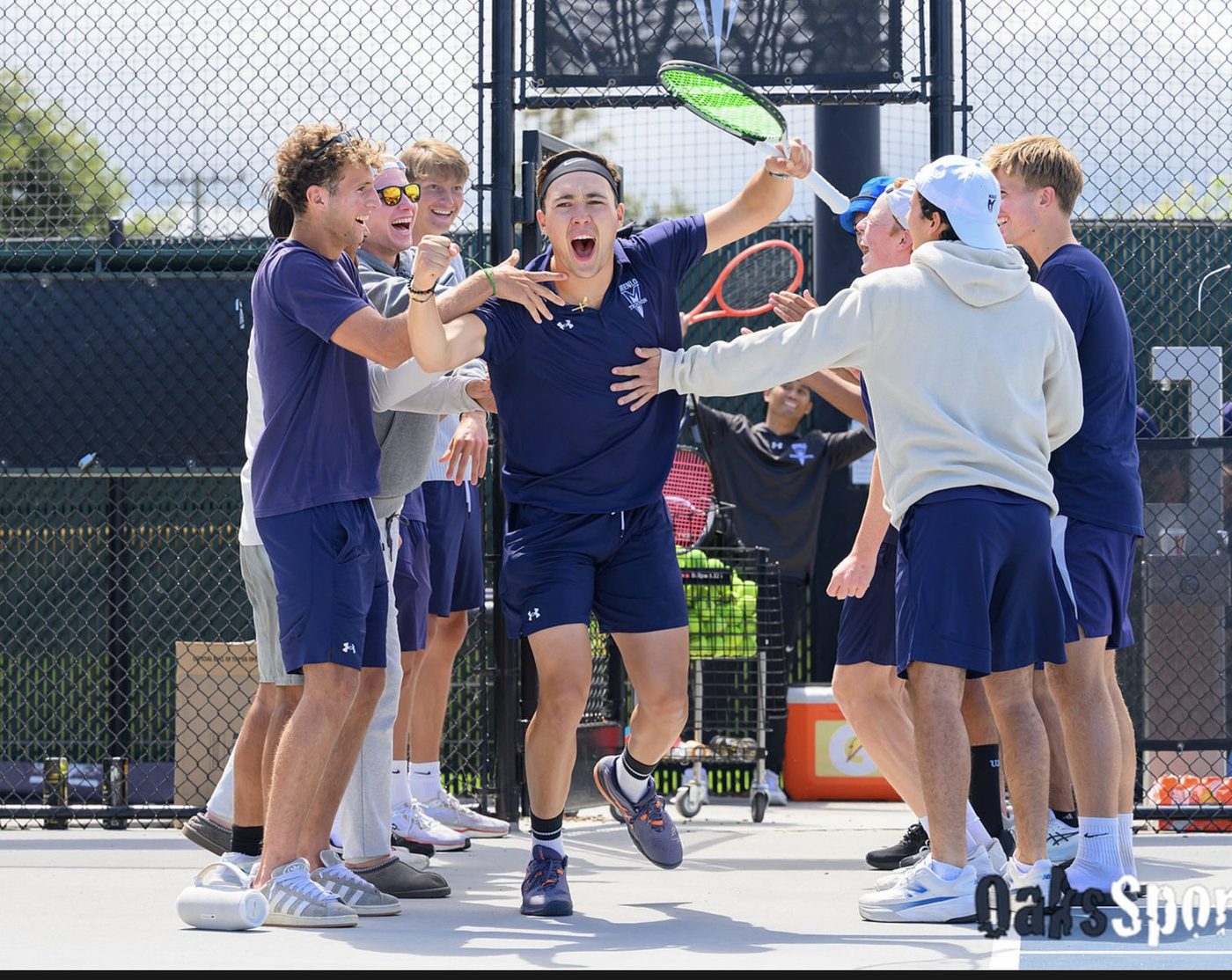
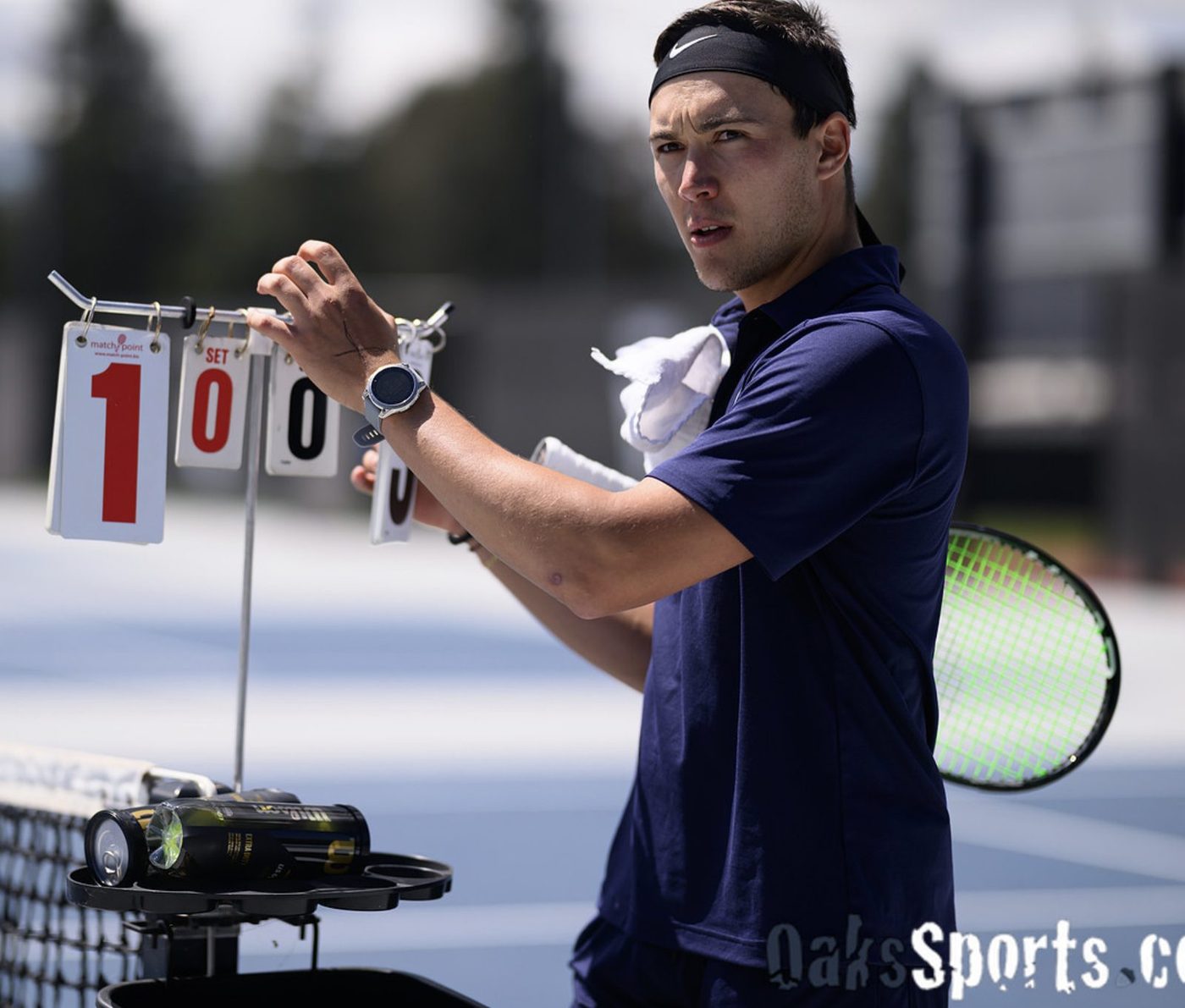
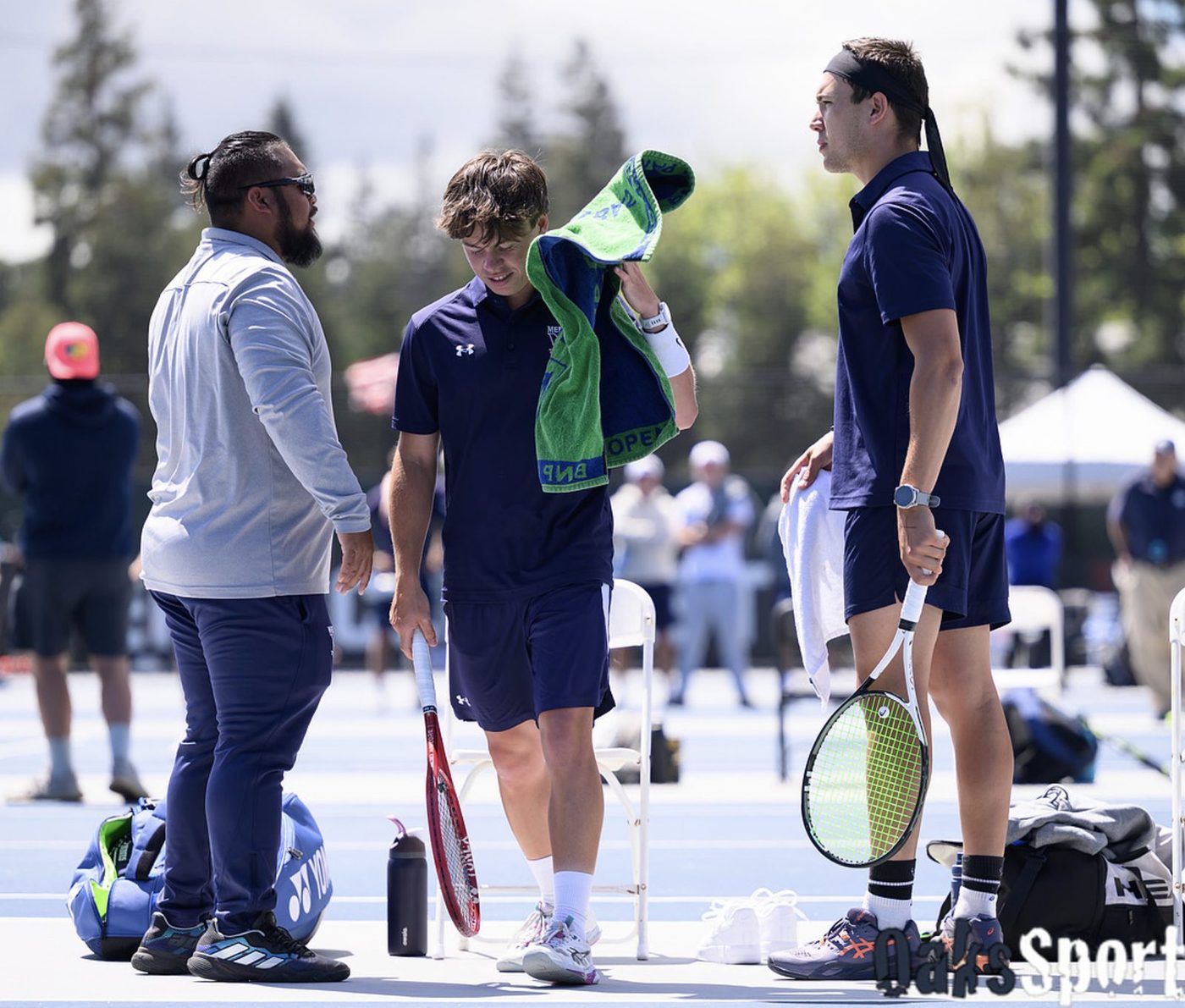
A tennis scholarship brought me to the US. I was recruited to play NCAA Division II at Menlo College in California. The sport was literally the door the whole story walked through. Season record: 25 matches, 16W / 8L / 1 draw, 64% wins.
Match point. The team reaction is the part you remember.
The athlete's life
So this wasn't a side story. At Menlo, the season set the rhythm of the year: the early mornings, the travel between campuses, the physical exhaustion on top of the academic work.
Read moreShow less
Sport at this level doesn't teach you "business lessons." It just trains habits. Showing up when you're tired. Preparing for something you might lose. Recovering from a bad set without letting it ruin the next one. Those habits carried over. Not as a metaphor; as a daily practice.
Endurance
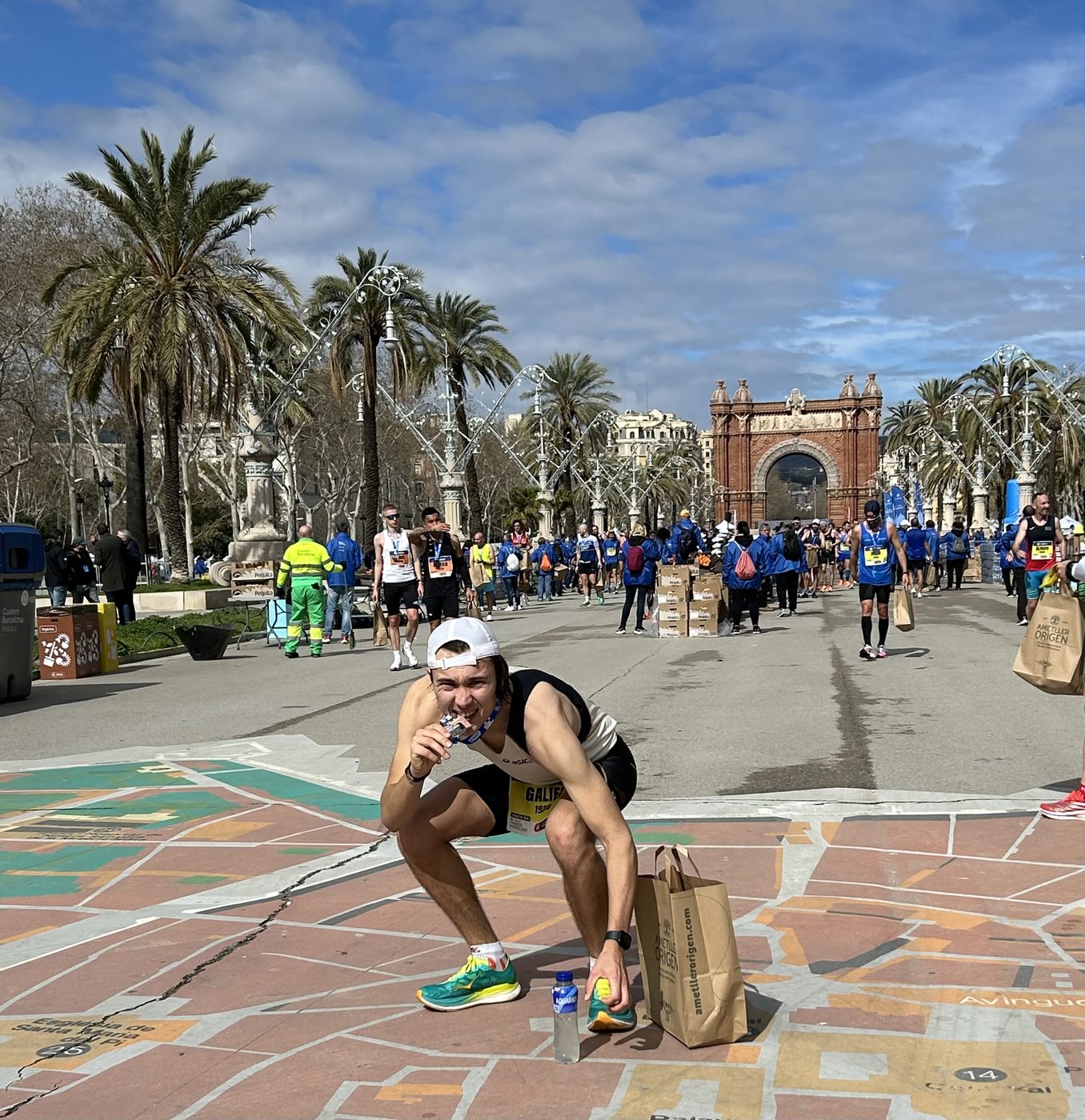
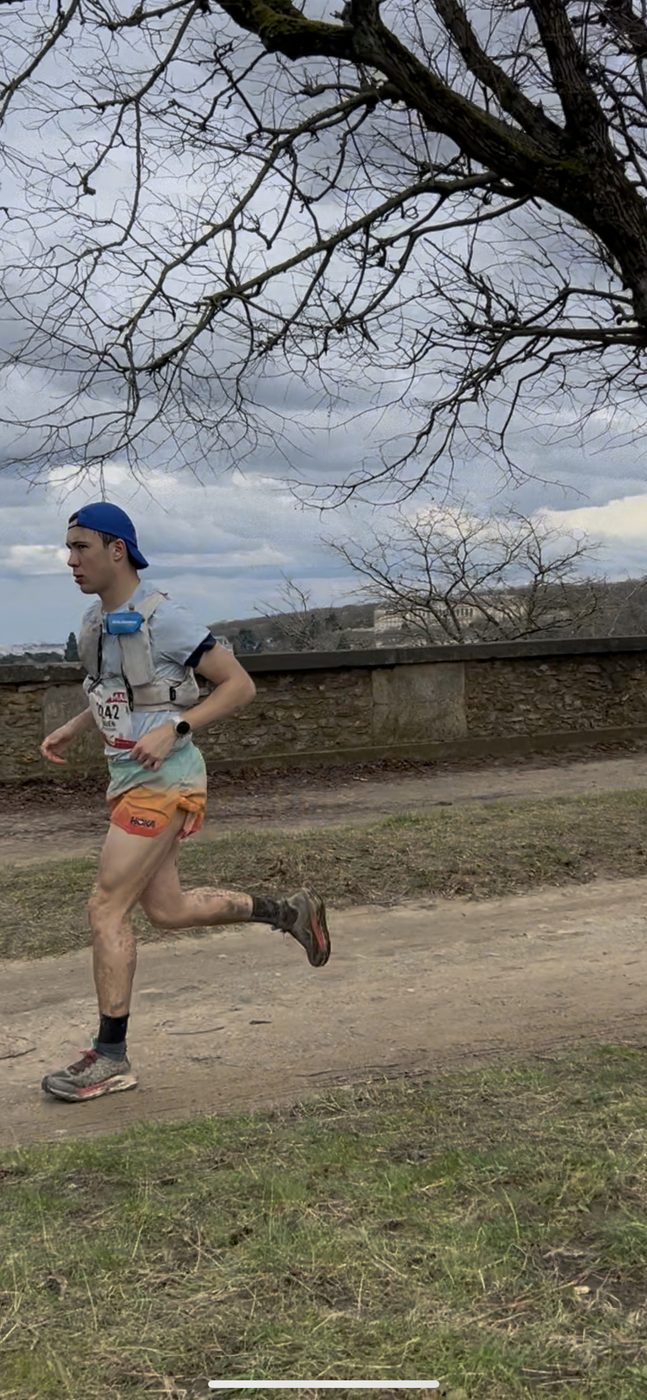
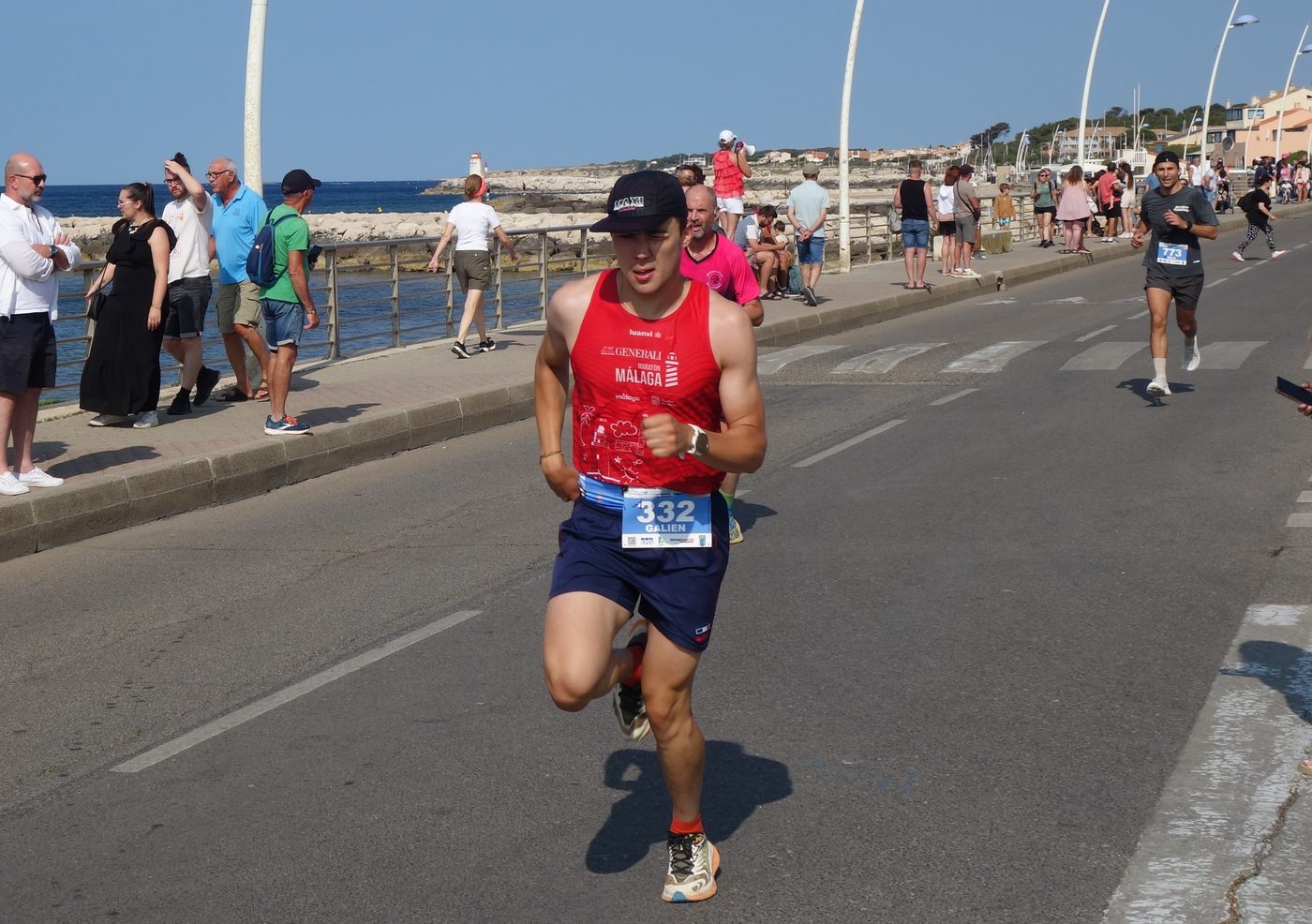
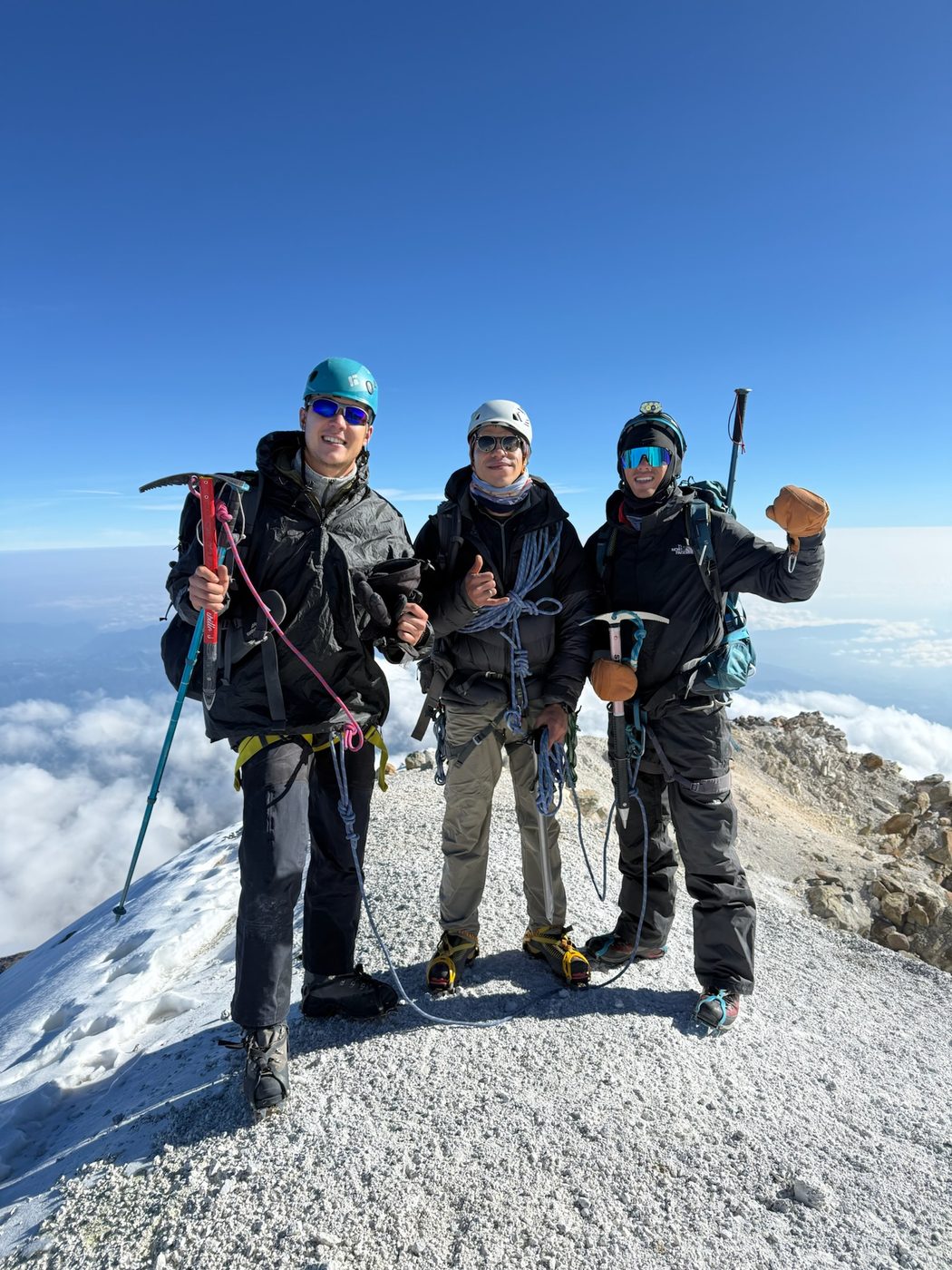
Alongside tennis, I run long distances. Marathon, ultra-trail, trail running. The kind of effort where the race is mostly against yourself and the terrain, not an opponent. The progression is slow, the suffering is real, and the satisfaction is earned over hours, not points.
Read moreShow less
Marathon personal best: 2:52. Multiple 100 km ultramarathons completed. The progression from short-distance tennis explosiveness to ultra-distance patience taught me more about myself than any competition result.
I run because it's the one part of my life where nothing can be negotiated. A 2:52 marathon or a 100 km trail doesn't care what else happened that week. What endurance actually gave me is quieter than any race result. Knowing how to keep going when the interesting part is long over. Knowing how to recover instead of just pushing. And knowing that most hard things stop being hard the moment you decide they're simply what you're doing today.
Part 2
The move
Choosing the United States
The move came through tennis, not through a business plan. After Mines Paris, a scholarship opened the way to study and do research in the US. I also got to play NCAA Division II, on the back of sixteen years of competitive play.
Read moreShow less
A year there costs around 110k USD; my agency negotiated a 70% scholarship. Without the racket, that door wouldn't have opened so early.
Read moreShow less
The timing wasn't an accident either. Everything I was working on pointed west. The deeptech founders I interviewed kept describing the US as the place where a technology is judged on what it could become. Not on the paperwork behind it. I wanted to see that from the inside rather than from a report. The plan was to come back after graduating and work on OPT. That part hasn't gone to plan yet, and I tell the whole story on the Failures page.
Landing on the ground
I arrived with one idea. Make the most of every week, build a network from zero, and be useful before asking for anything. No safety net, no local reputation, just the decision to show up.
Read moreShow less
The first few weeks were disorienting. Everything moves faster. The unwritten rules are different. And you realize very quickly that what made you credible in France doesn't automatically translate.
Read moreShow less
One thing I'd tell anyone arriving: take your first week and spend it meeting as many people as you possibly can. Don't plan, don't optimize, just say yes to everything. It's the fastest way to understand the culture, absorb the energy, and figure out where you actually fit. The relationships you build in that first week often end up being the most important ones.
Part 3
Networking
Networking and the Mines thesis
The 57 interviews for my Mines thesis turned into an education of their own. One thing I noticed. Reaching out about a podcast episode or a piece of research works completely differently from a cold LinkedIn message. People respond when there's a reason. A coffee is hard to refuse; a direct ask for an internship is easy to ignore.
Silicon Valley, from the inside
The Silicon Valley Immersion and the Venture Series deserved their own page. The companies, the people, and the numbers on why this ecosystem is different in kind.
Explore my Silicon Valley experience →
Events and speaking
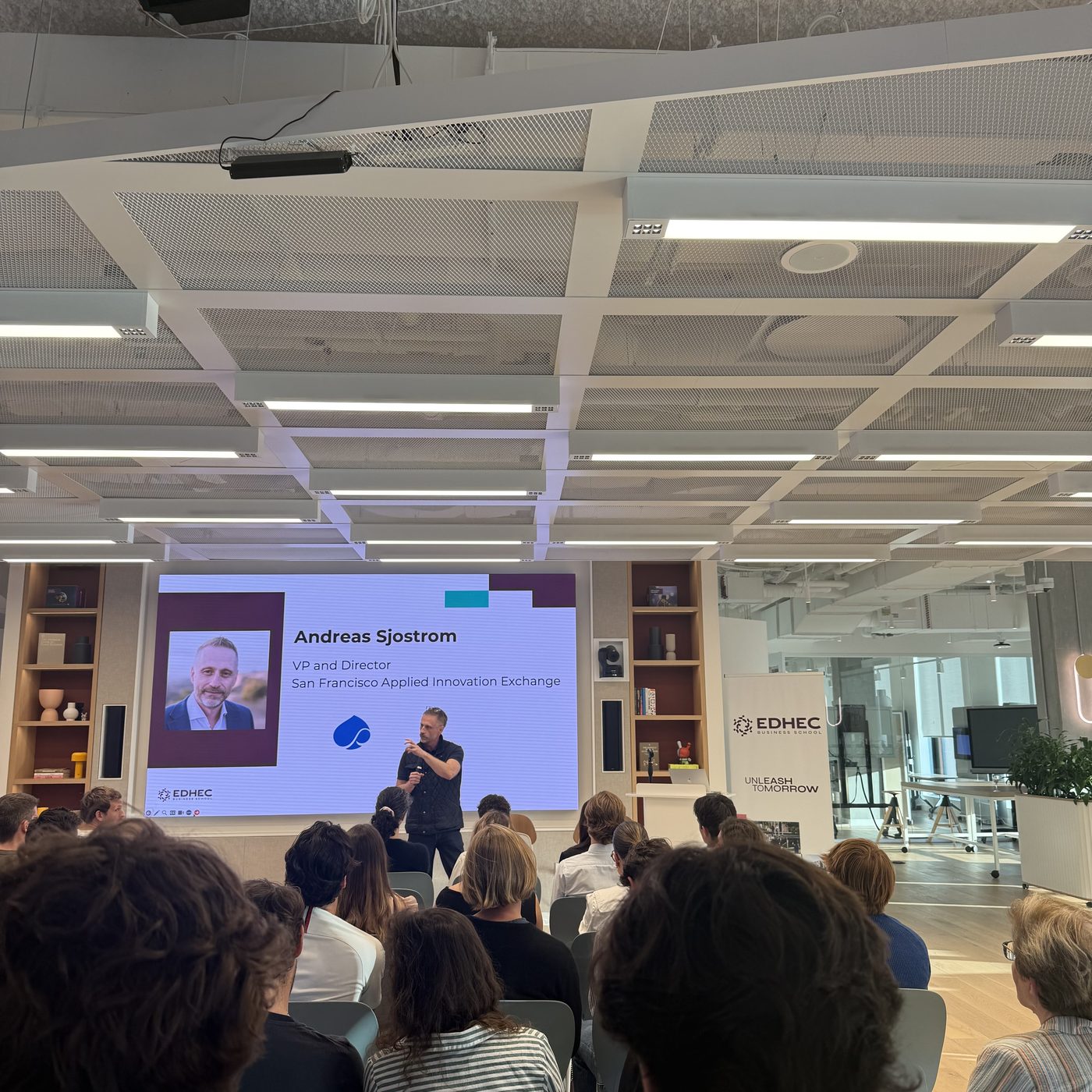
I spoke wherever I could get a slot. At EDHEC, at Kedge, inside the immersion, at the Finance Hybrid Conference at Silicon Valley Bank, and at the Tech & Talk Summit.
Read moreShow less
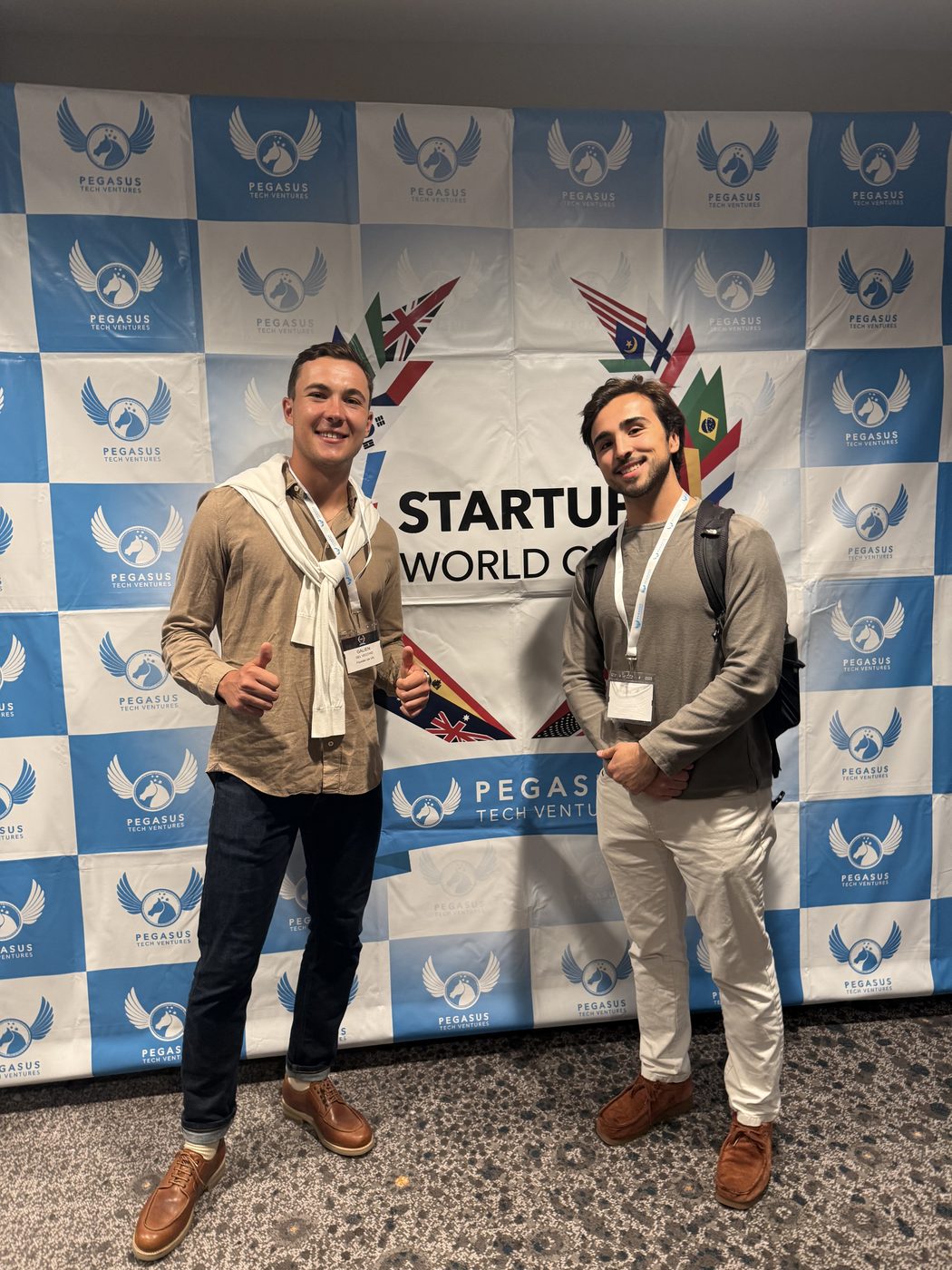
I also went to everything else I could get into, like the Startup World Cup run by Pegasus Tech Ventures. It was the same exercise every time: present the work, defend it, take the pushback. I did it in a second language, in front of audiences used to fast, direct answers. It taught me more than any amount of reading.
The French Tech Community
I volunteered at French Tech community events in the Bay Area and helped organize some of the gatherings. Partly to contribute. And honestly, also to meet people, understand the ecosystem and get my name out.
Read moreShow less
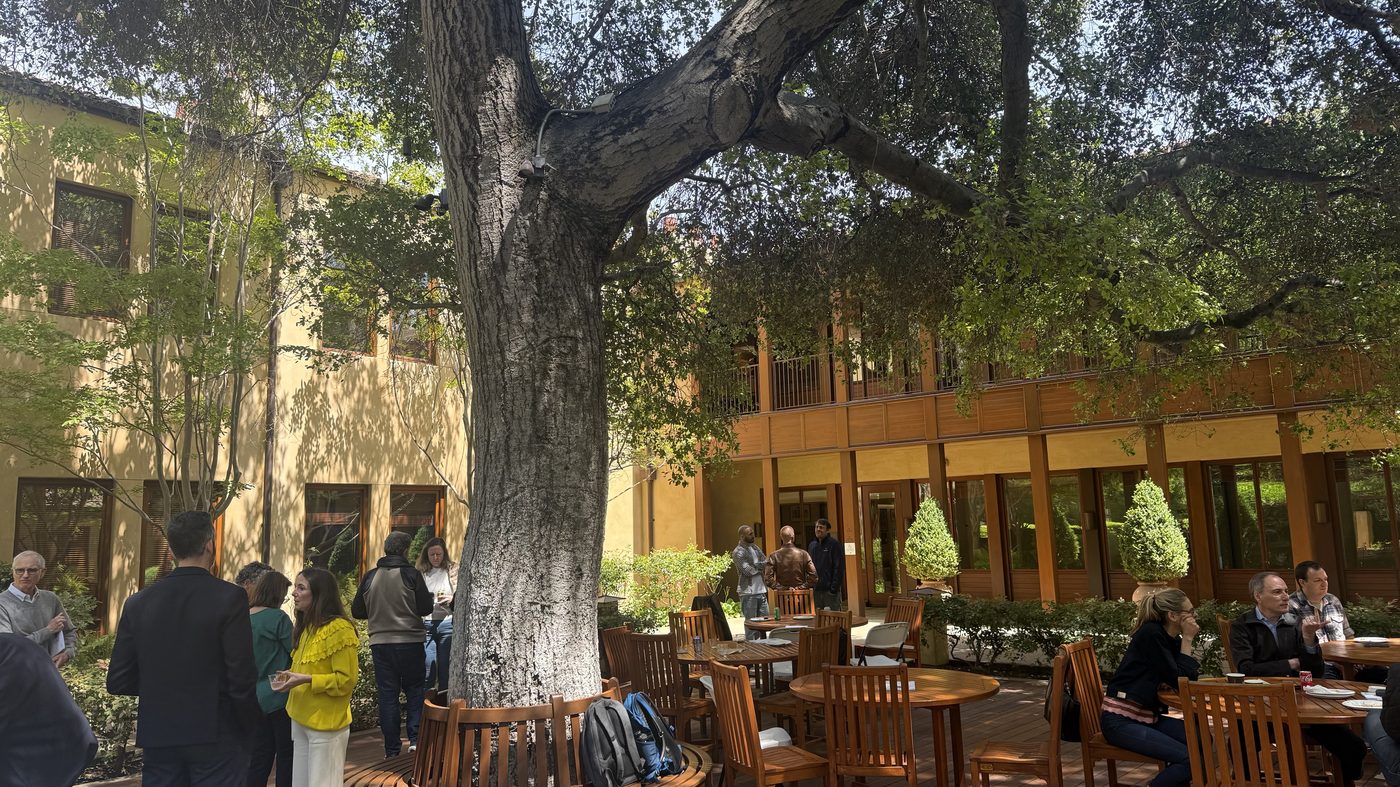
Volunteering is the cheapest ticket into rooms you have no other reason to be in. More than 5,000 miles from home, the French community turned out to be a piece of home. Alumni, founders who had made the same crossing, rooms where the accent, the references and the ambition all lined up. A stranger could become a contact in one conversation, and that familiarity was worth more than any formal introduction.
Networking, through tennis
Tennis was the door, and it's a strange one. In Paris, it put me in front of executives, founders and investors. People you would normally only reach through private dinners, or a warm intro three degrees removed.
Read moreShow less
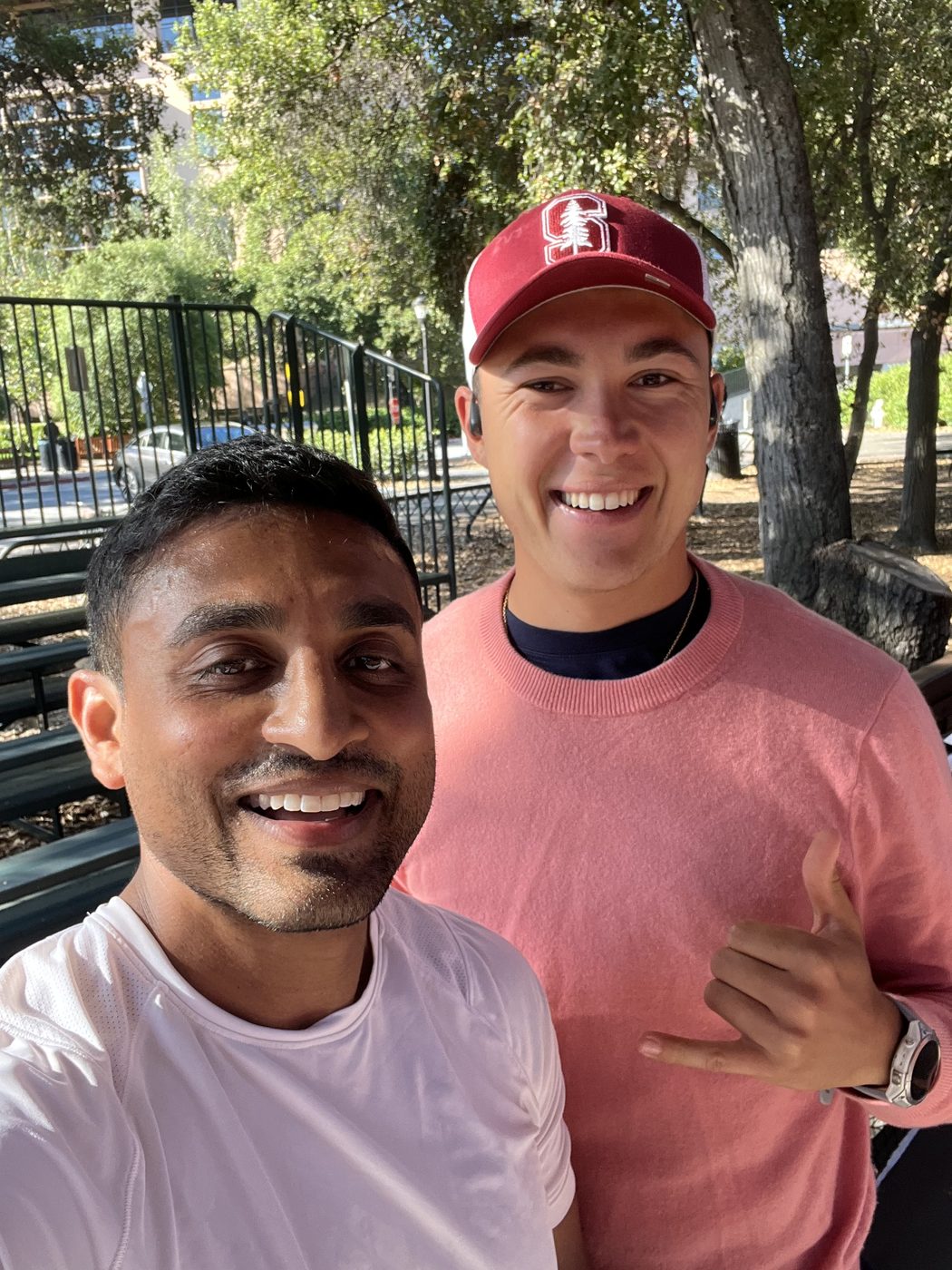
On a court in California, you just play, and afterwards you talk. The racket did more for my network in a year than any amount of cold outreach would have. It put me across the net from people I had no other reason to meet.
Part 4
Learning by building
Co-founding a company remotely
I co-founded and helped run one of my two ventures almost entirely at a distance. Across time zones, on async work. Building trust through a screen with people I sometimes had not met in person.
Read moreShow less
What made it actually work was one boring habit I forced on myself: I wrote everything down. Every decision, every spec, every next step, captured so nobody was ever stuck waiting on a call to move. We shipped the financing decks, the CRM, the pricing, on the dates we set, from three different time zones. I learned more about running a team from that constraint than from any class.
Classes
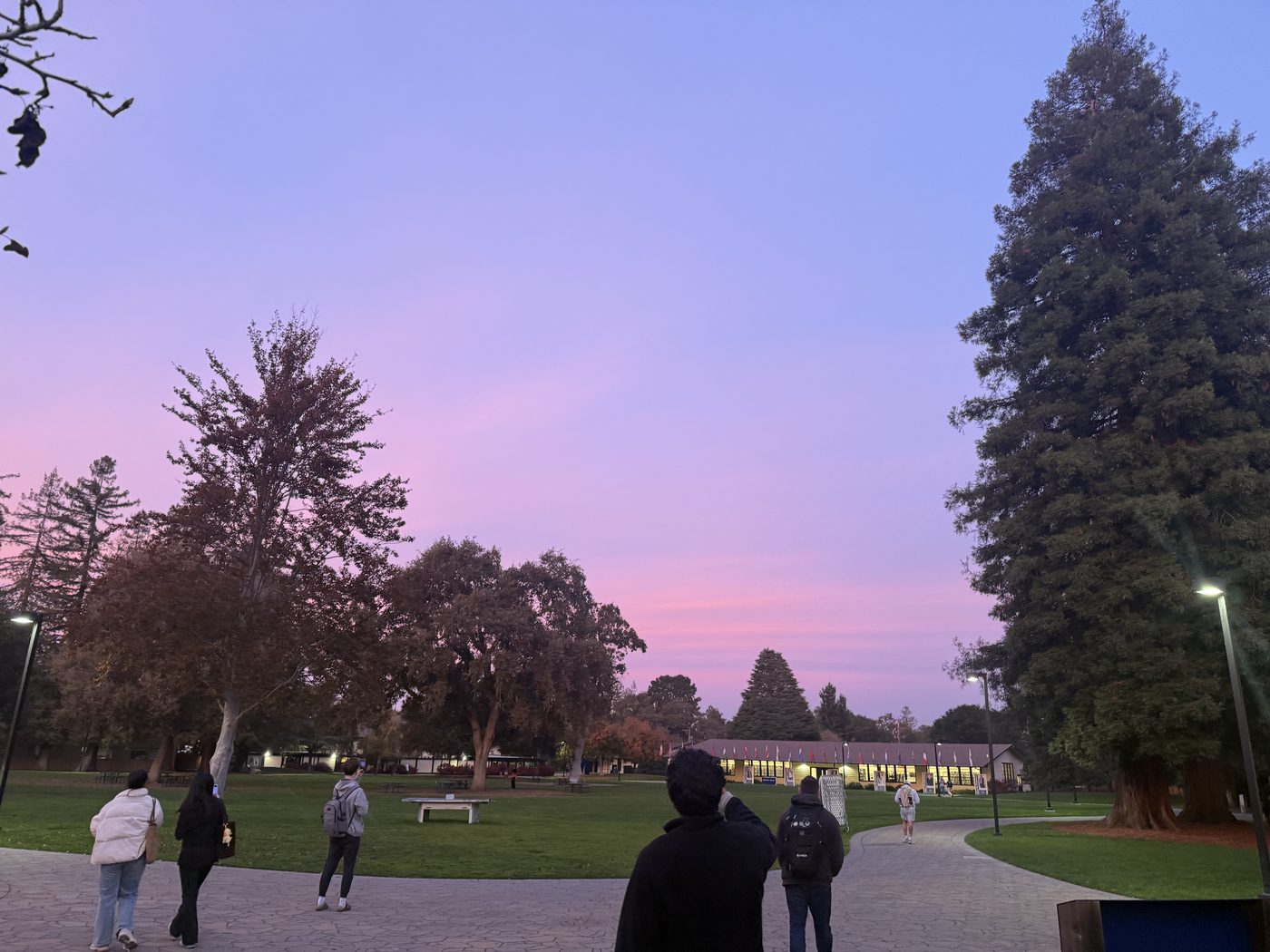
The American classroom runs on a different engine. Case-driven, participative, graded on contribution as much as exams. In France, you're trained to produce the polished answer. Here, you're expected to think out loud, challenge the case, be wrong in public without it being fatal.
Read moreShow less
That shift was uncomfortable at first, and then it became the most useful thing I brought back.
Podcasts
I went on the Americando podcast to talk about studying and competing in the US as a student-athlete.
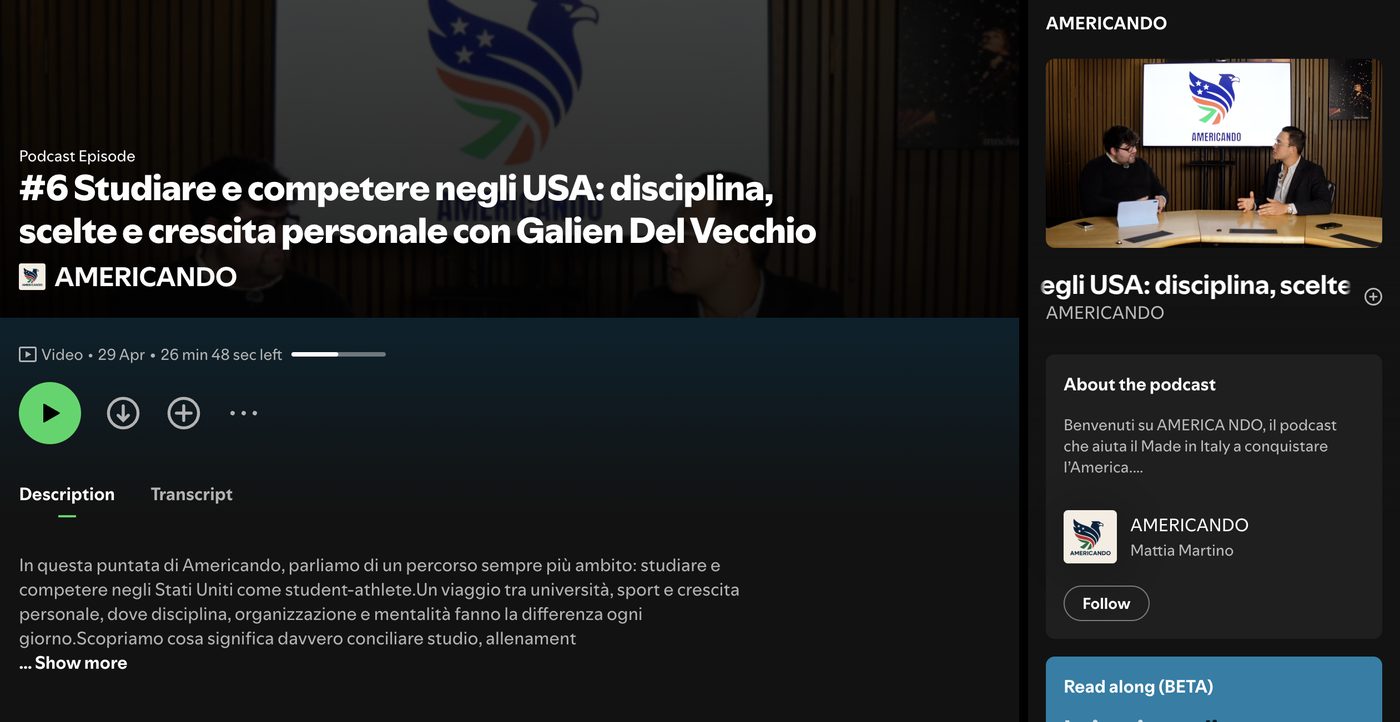
The habit that came out of it matters more than the appearance itself. I now work through tech podcasts the way I'd work through a course. I extract the frameworks into structured notes I actually reuse.
Read moreShow less
A whole week of episodes might collapse into ten usable ideas. How to read an AI announcement like an analyst. Why vertical, workflow-integrated products beat general ones. It's a slower way to listen and a much faster way to learn.
Part 5
Improving my technical skills
Academic research
What began as a thesis turned into real research. And into a habit: putting my work in front of people whose job is to find its flaws. With Dr. Faten Ben Bouheni, I wrote a paper on the risk-return profiles of VC-backed firms.
Read moreShow less
It's published on SSRN, was presented in Oakland and in Nice, and was picked up by VC funds once online. My Menlo capstone on delayed AI-generated trading decisions is the second published piece. Two more are in progress. One on Europe's scale-up gap. One with Amine Lahiani, on whether accessible AI can help European DeepTech industrialize. The academic work and the advisory feed each other: the research asks the questions, the fieldwork tests them.
Read the SSRN paper · See all research
Vibe coding
I never planned to learn how to code. I had no background, no training, no particular interest in development. It started because I had a problem: my contacts lived in a tangle of spreadsheets, duplicated, disconnected, unsearchable. Something that should have been simple was impossible to use.
Read moreShow less
So I started describing what I wanted in plain language. AI drafted a first version. I tested it, broke things, fixed them, broke them again. Progressively I started understanding what was happening behind the code. Not deeply, not like a developer, but enough to shape the output rather than just accepting it.
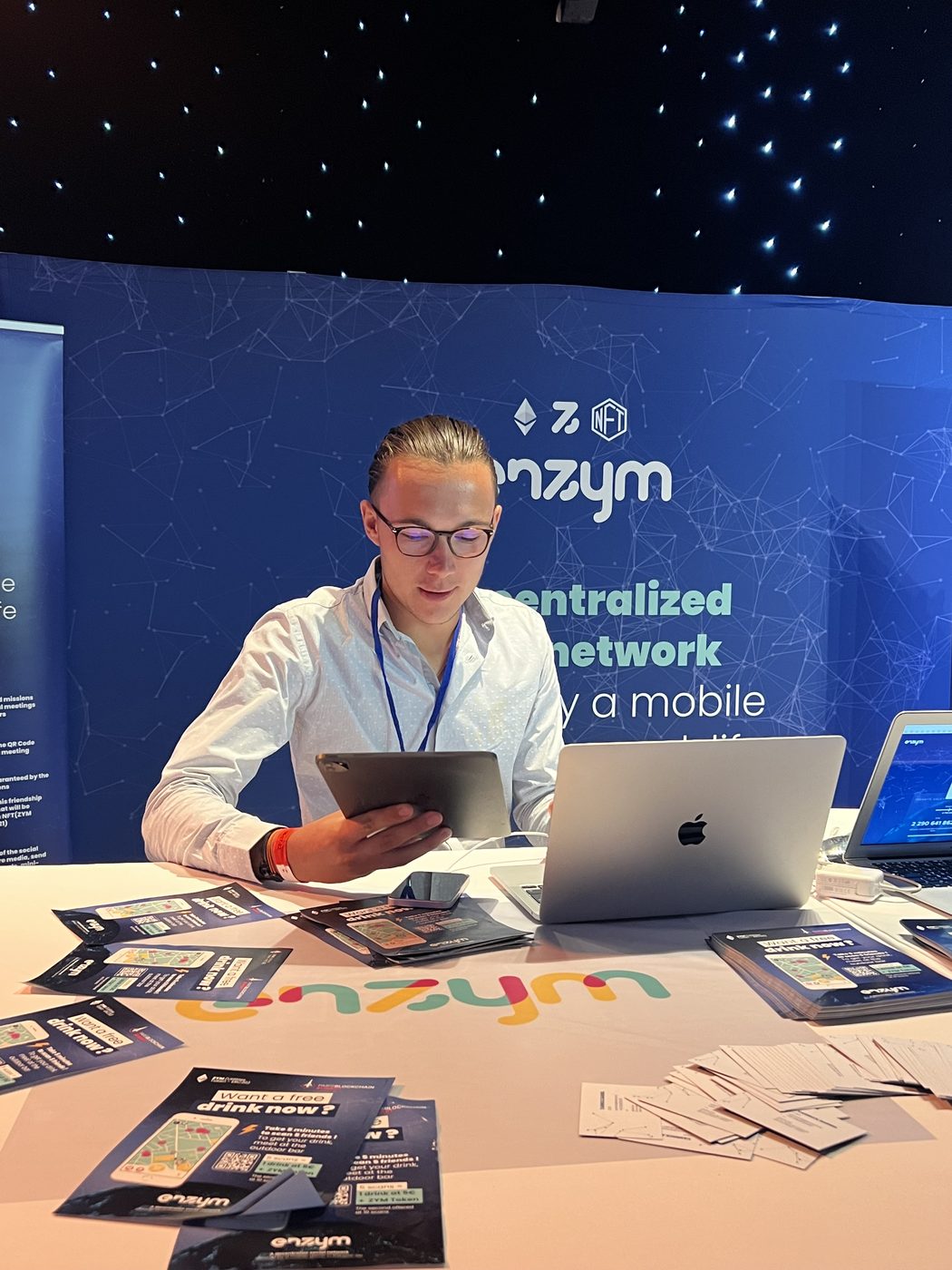
The CRM became my testing ground, but it didn't stop there. I rebuilt this website myself. I wired up prospecting tools for the startup. I ran the regression work for the research myself. OLS models in Python with statsmodels. The full econometric pass in Stata for the VC and ESG paper, log transformations, board variables and all. I experimented with blockchain at Paris Blockchain Week, and with every new AI coding tool as it landed. The pattern was always the same: start building before I fully knew how, and let the thing teach me. The messy spreadsheets turned into one consolidated system: thousands of contacts, deduplicated, tagged, with a live priority score and a dashboard.
Then I added an AI layer on top: ranking who to reach out to, drafting first messages, remembering when to follow up. An afternoon of work for something that would have taken weeks, or an outsourced developer, a year earlier.
I didn't become a developer. I learned to build.
What changed wasn't that I could suddenly write software. It was the distance between "I need a tool that does X" and having that tool. It went from months and a budget to an afternoon. Ideas I'd previously have abandoned because building them was out of reach became things I could just try.
The distinction
What I didn't become
A developer. I couldn't hold my own in an engineering team. I don't know what a professional knows. And I wouldn't claim otherwise on a résumé.
What I did become
Someone who can go from an idea to a working thing without waiting for anyone. Enough to build, test, throw away and rebuild.
That distinction matters more than it sounds. It also changed how I work with founders: when a technical team explains what they're building, I follow it. When someone says a thing will take three months, I have a rough sense of whether that's true.
Read moreShow less
And when a company needs a tool to track something, I don't automatically assume it has to be bought.
Bloomberg
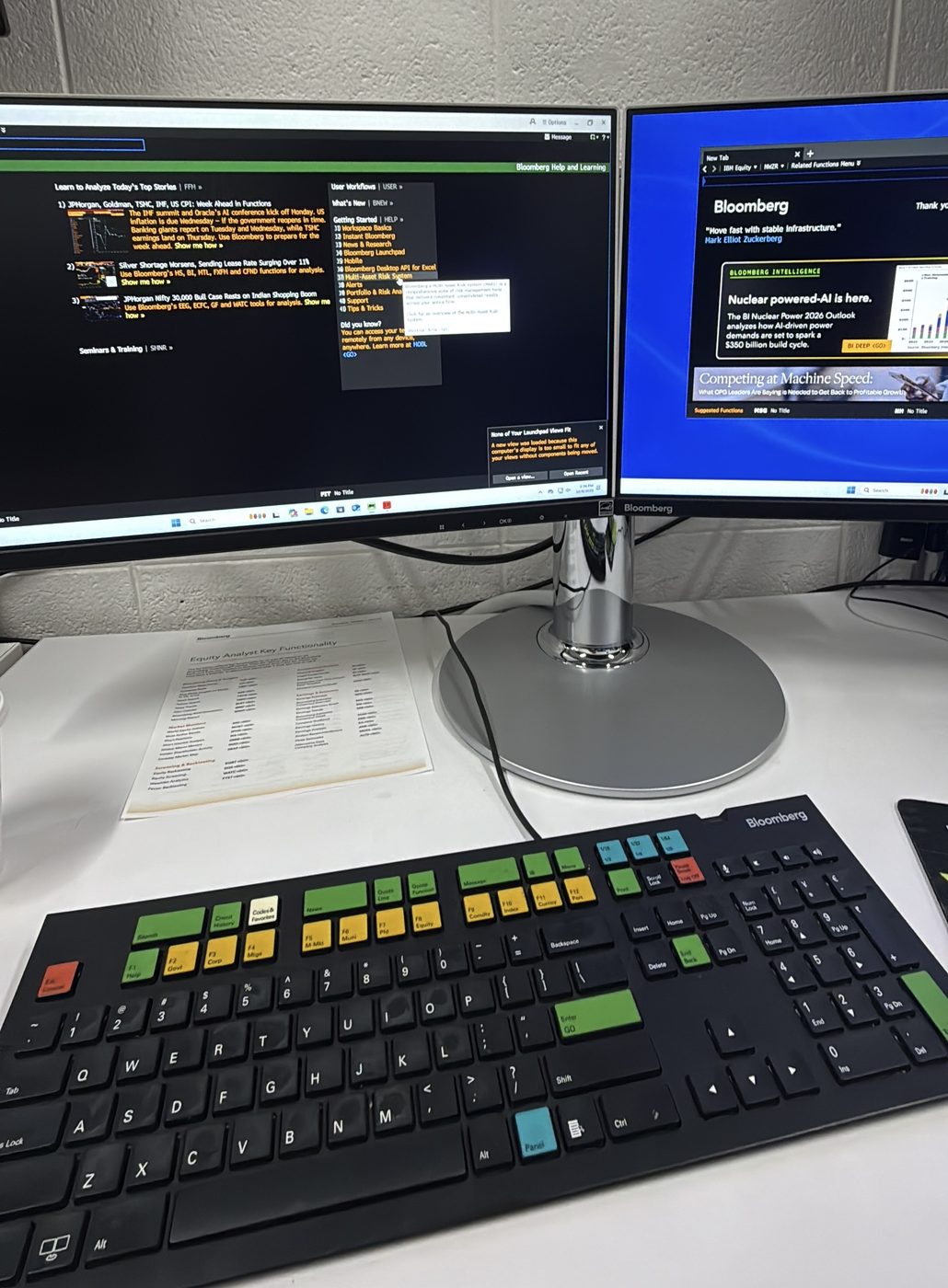
At first, Bloomberg was just a tool I was learning to use. Finding a stock price, pulling a ratio, navigating the terminal without getting lost. Then I started building something with it.
Read moreShow less
The progression mattered more than any single certificate. First Bloomberg Market Concepts and Finance Fundamentals, to learn the terminal's logic. Then Spreadsheet Analysis. Then the Bloomberg Query Language, to pull data directly instead of clicking through screens. I went from looking up single numbers to writing queries that pulled structured datasets across companies, sectors and years. At some point I realized I wasn't just looking at Bloomberg anymore. I was asking it questions. A terminal stops being intimidating the day it becomes your data source.
One project made it concrete. I built a dataset on AI deployment by industry, with annual data from 1996 to 2025. It covers major US companies and leading global tech firms. Financial fundamentals, R&D, patents, AI investment, ESG, governance, risk. The dataset taught me something I hadn't expected: having access to data is the easy part. Knowing what question to ask is harder. A number by itself tells very little. The same number across time, companies, and sectors can tell a much more interesting story.
That data work fed directly into the research with Dr. Ben Bouheni. A study of how VC backing, ESG and governance affect profitability and valuation, on a 2015-2025 panel of technology and real-estate companies. By the end I was building my own datasets from the terminal and feeding them straight into the regressions. The quantitative methods, OLS regressions and robustness checks, were new to me. But the interesting question was never which regression to run. It was: what can financial data actually tell us about a company, and where do the limits of that data begin?
The final step was the Global Trading Challenge. A virtual $1 million portfolio, long-only, no leverage, maximum 20% per stock. For the first time I wasn't analyzing. I was deciding. The model portfolio split roughly 60% quality growth, 30% momentum and deeptech, 10% event-driven. Analyzing a company is one thing. Deciding what to actually do with that analysis is something else entirely.
Part 6
Enjoying the experience far from home
Travels and discovering California
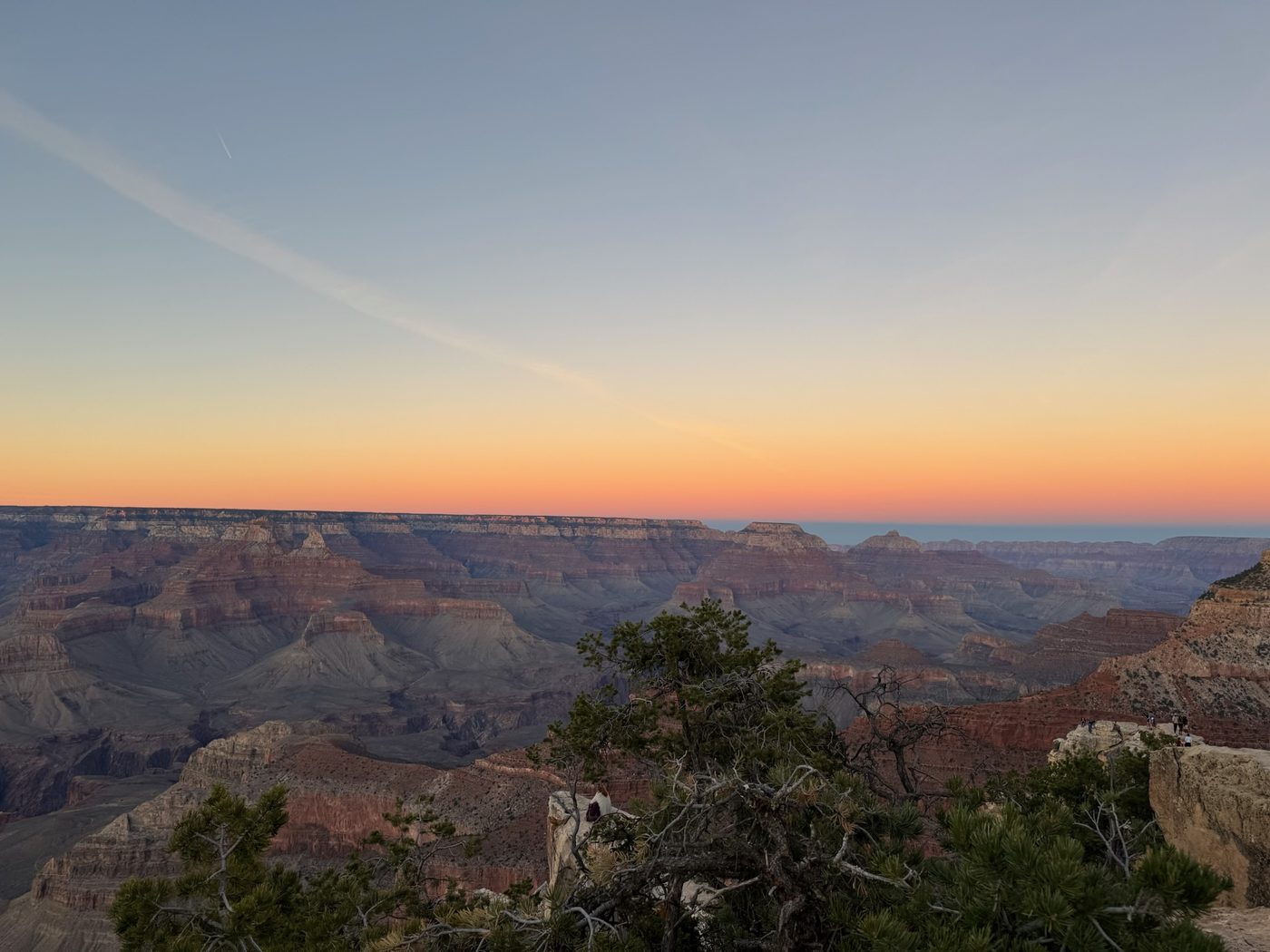
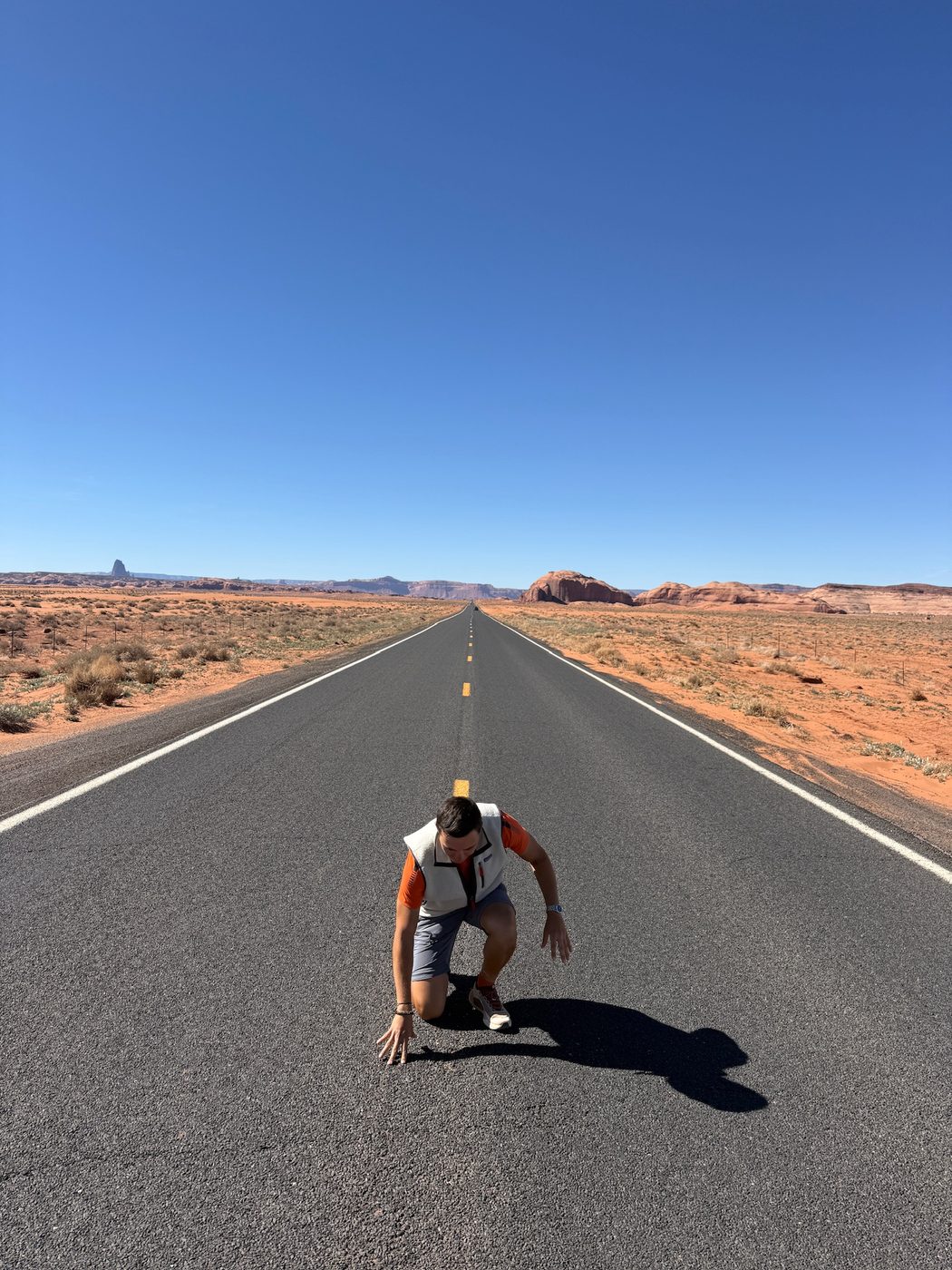
Between matches came the country itself. California first, then well beyond. The Grand Canyon at sunset, the empty roads of Monument Valley. National parks and states crossed, on a calendar packed end to end.
Read moreShow less
The road trips were where the year decompressed. Long drives, no agenda, the country going by. Seeing that much geography in so little time still surprises me when I look back.
Social life in San Francisco
The energy is the thing people underestimate. Every event, every meetup, an intensity that's hard to describe until you're in it. What surprised me most was the openness: people genuinely curious, quick to help, quick to connect you onward.
Read moreShow less
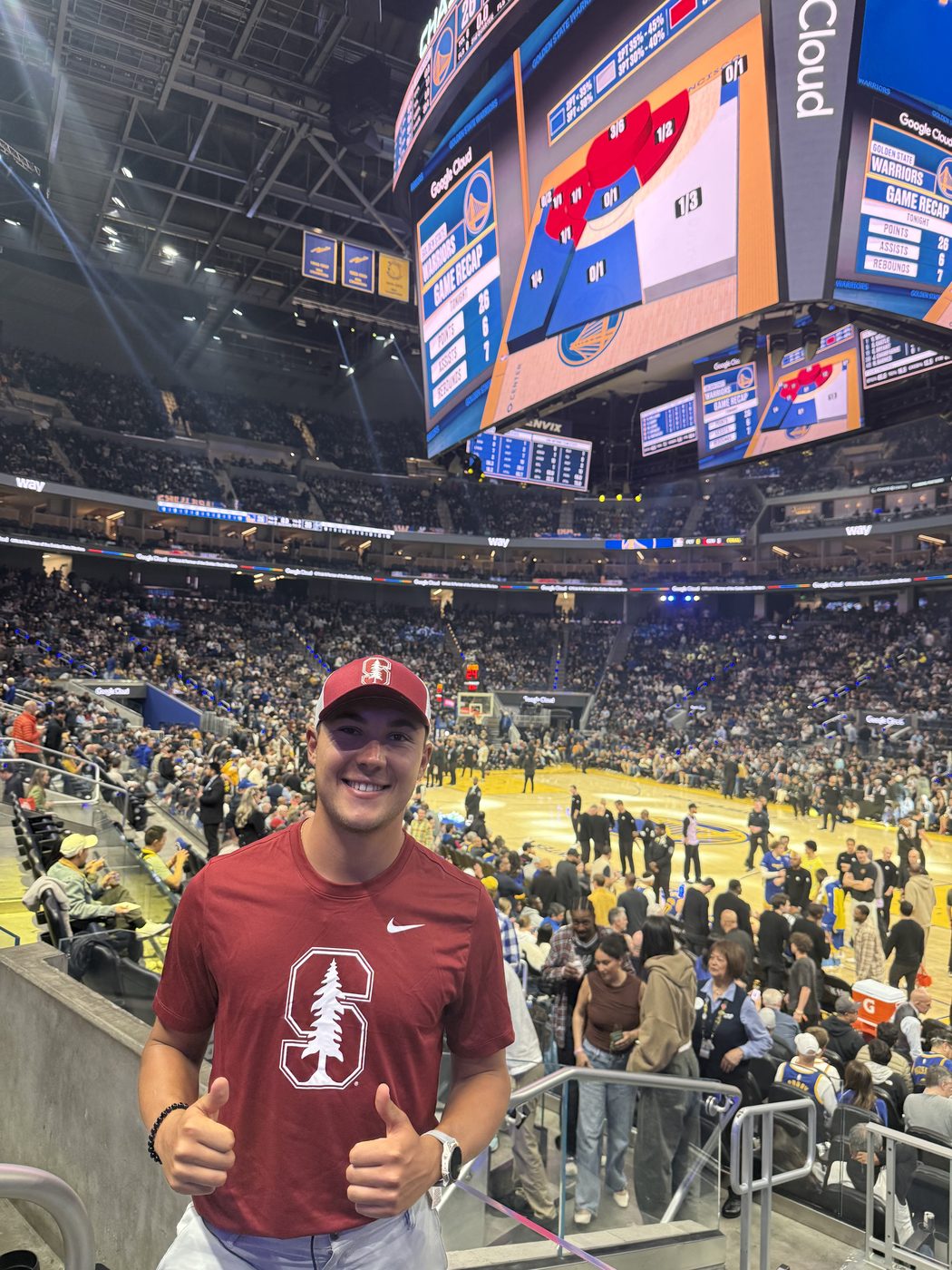
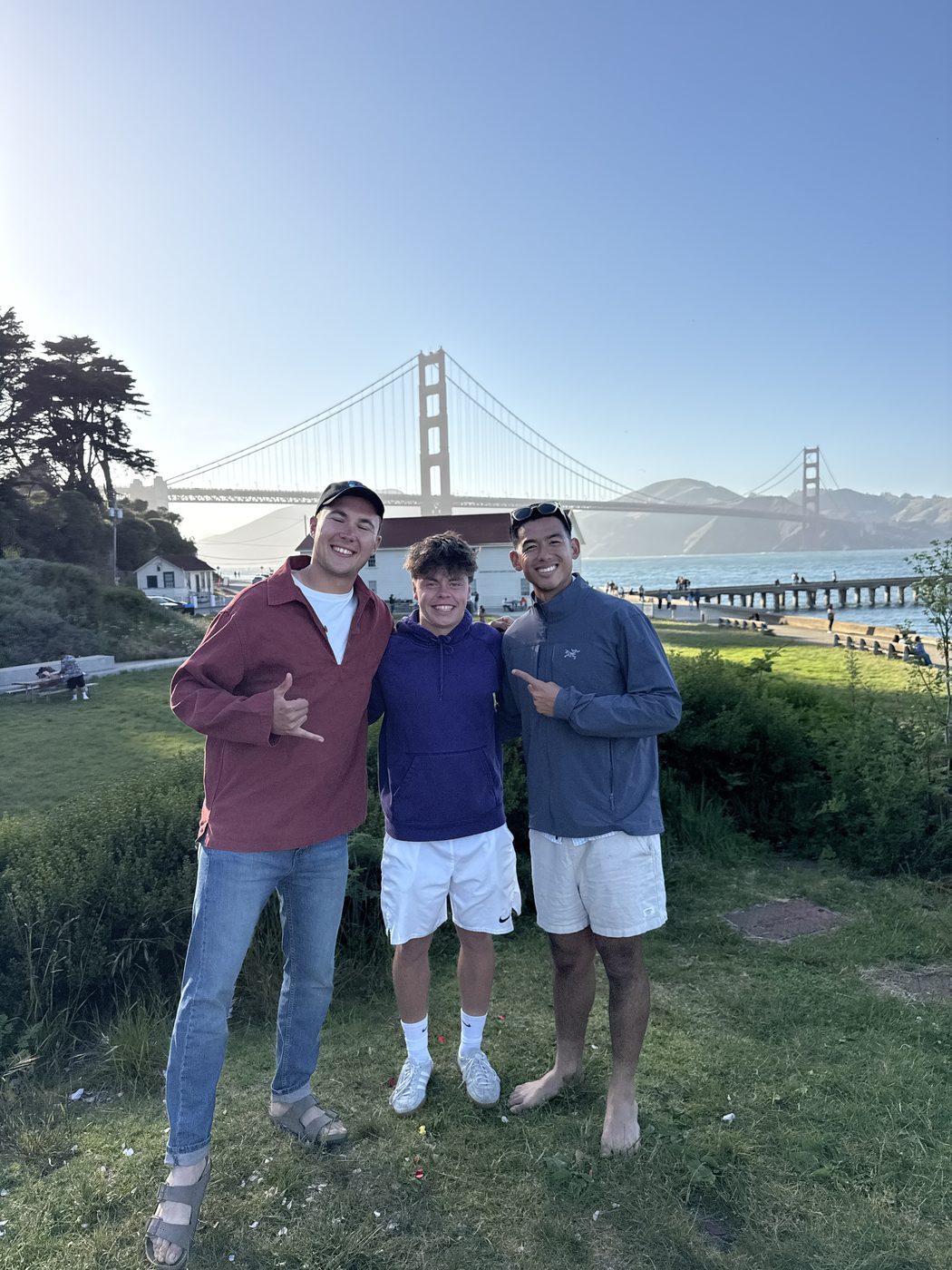
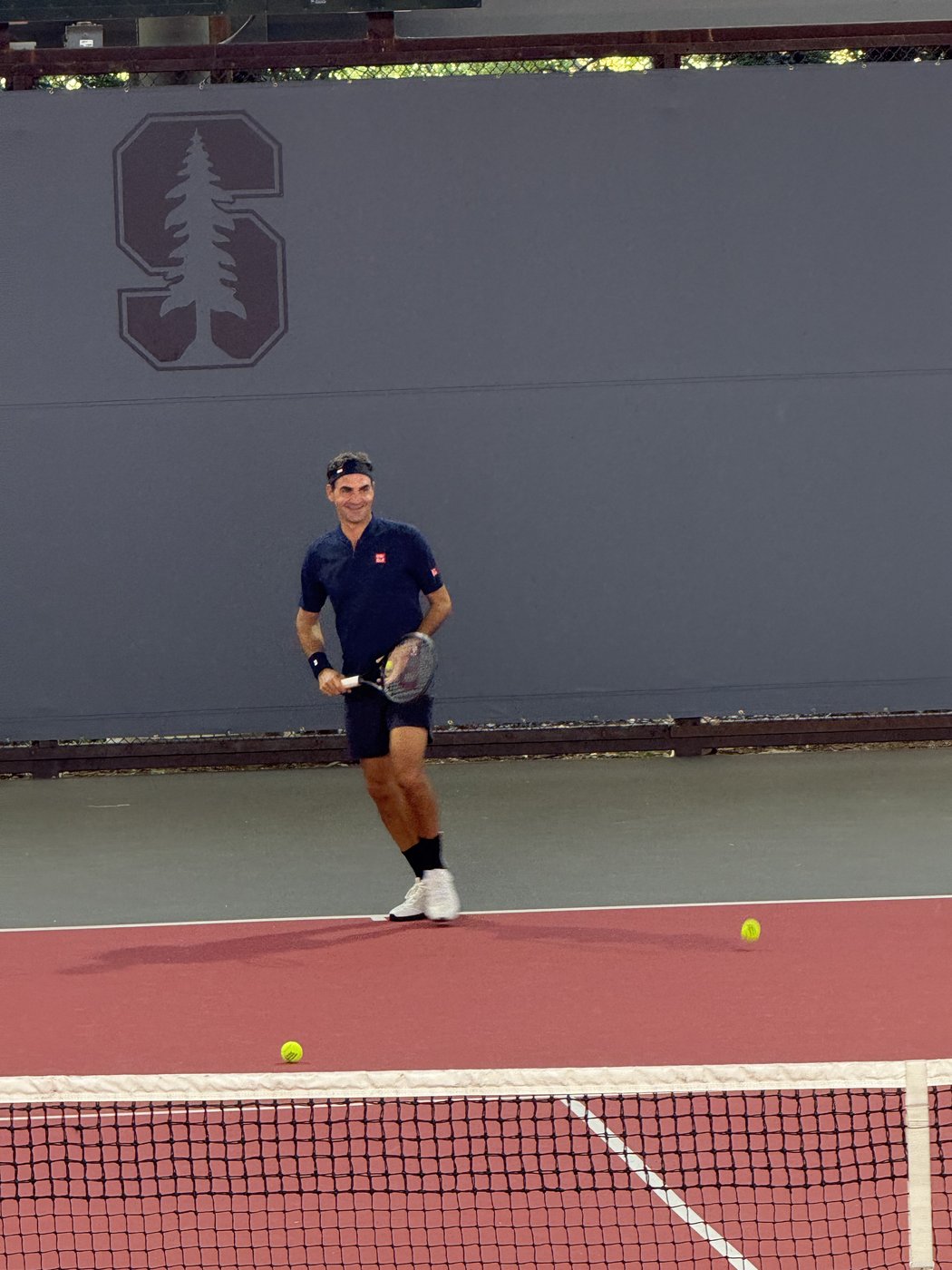
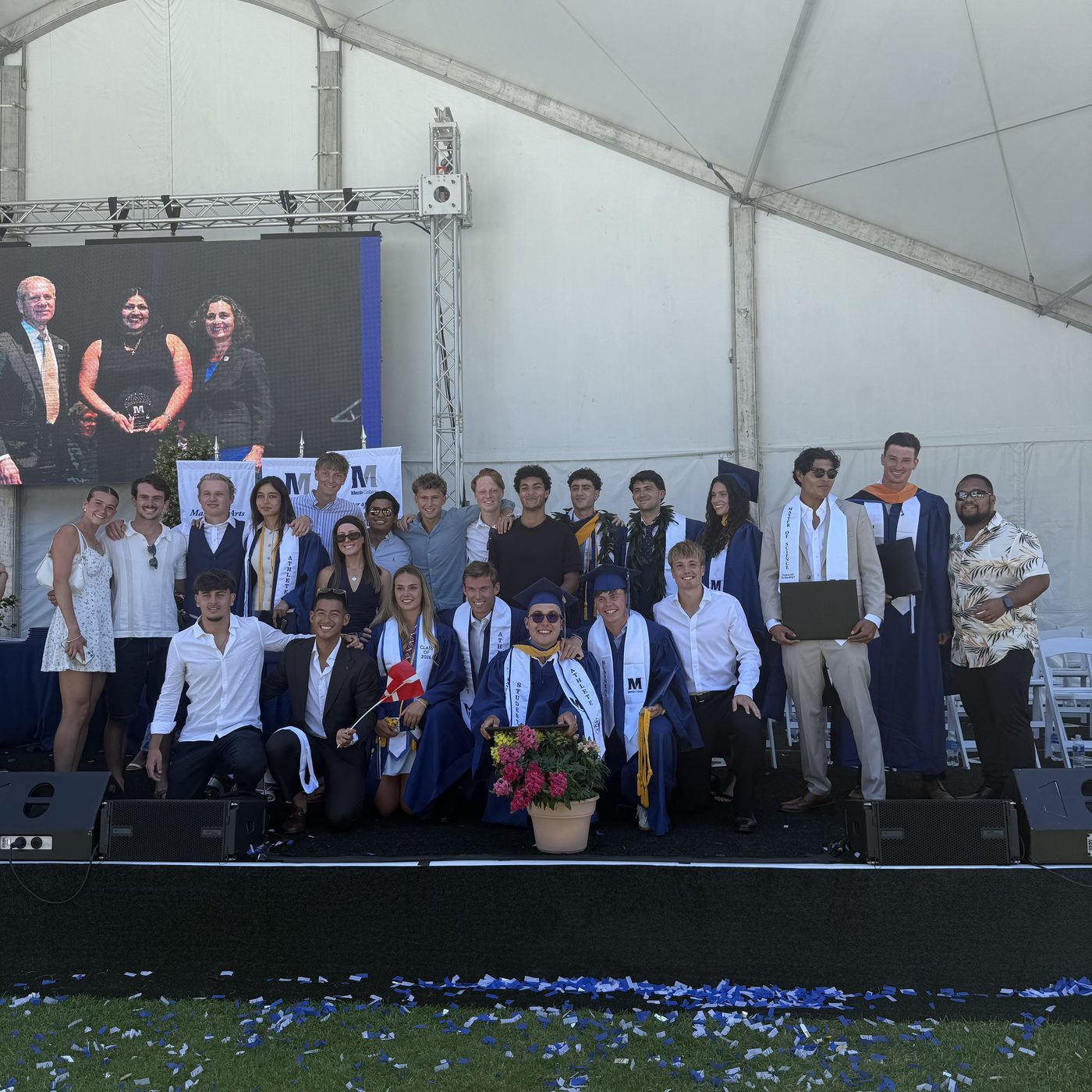
Ambition here is social rather than guarded, and that changes how fast things happen. Some of the best memories are the small ones. A Warriors game at Chase Center. An afternoon with friends by the Golden Gate. Watching Roger Federer practice at Stanford. And the graduation ceremony at Menlo, at the end of it all.